

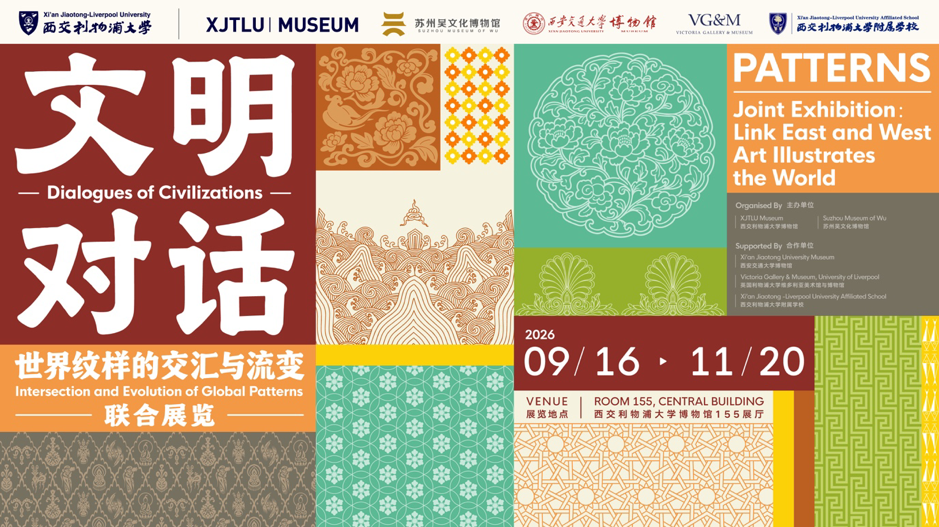
Patterns Link East and West: XJTLU Museum opens joint exhibition
On 16 September, the XJTLU Museum held the opening of “Patterns Link East and West, Art Illustrates the World”, a joint exhibition exploring how decorative patterns have carried meaning, memory, and cultural exchange across civilisations for thousands of years. The event combined an opening ceremony, a guided tour of the galleries, and a themed cultural workshop. The exhibition remains on view until 20 November.
In his opening speech, Dr Xiaoyue Li, Vice President of XJTLU, said the exhibition aligns with the national 15th Five-Year Plan and reflects a meaningful effort to deepen museum-university collaboration. Living its “whole campus is a museum” vision, XJTLU has brought heritage resources into campus life and education, boosting students’ cultural confidence and global outlook – with plans to deepen museum, community, and international exchange ahead.
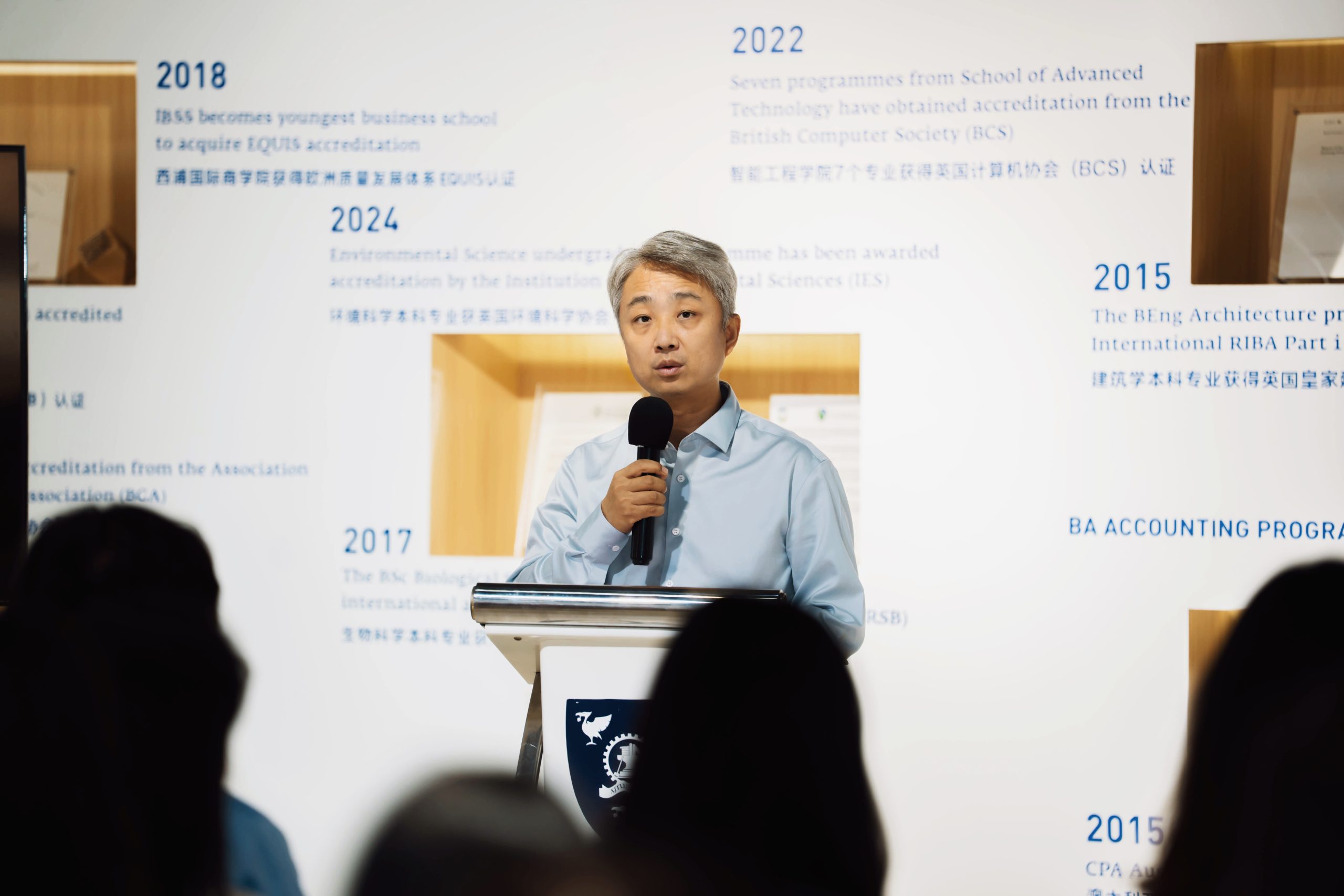
Dr Xiaoyue Li
Zenglu Chen, Director of the Museum of Wu, highlighted the significance of patterns in his speech: “Patterns are a silent language. They capture the unique aesthetic character of a civilisation while also preserving the historical traces where different cultures have collided and blended.
“Through this exhibition, we want to expand our view from China to the wider world, to observe how patterns have travelled and evolved, and to see the dialogue between East and West that has taken place through patterns.”
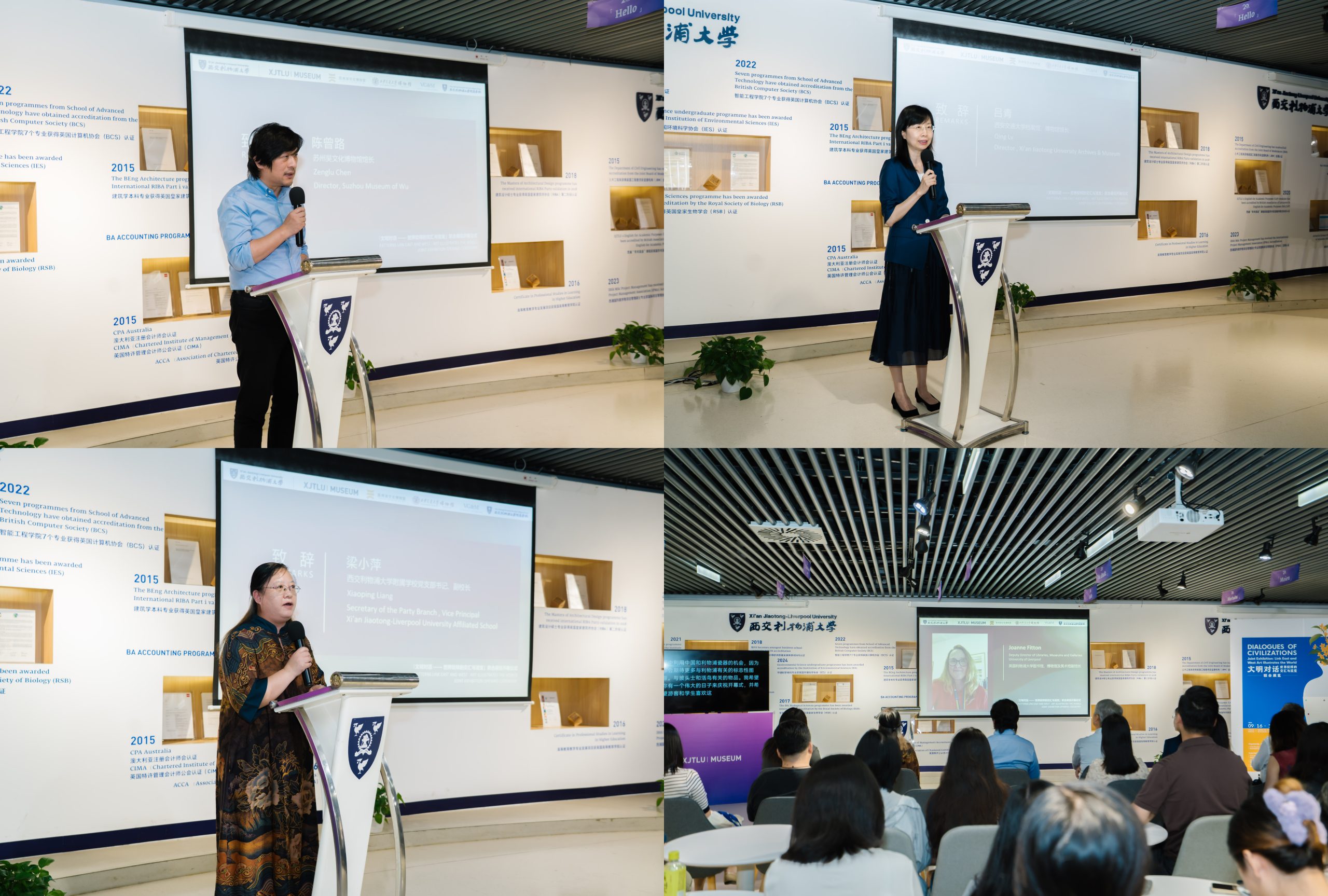
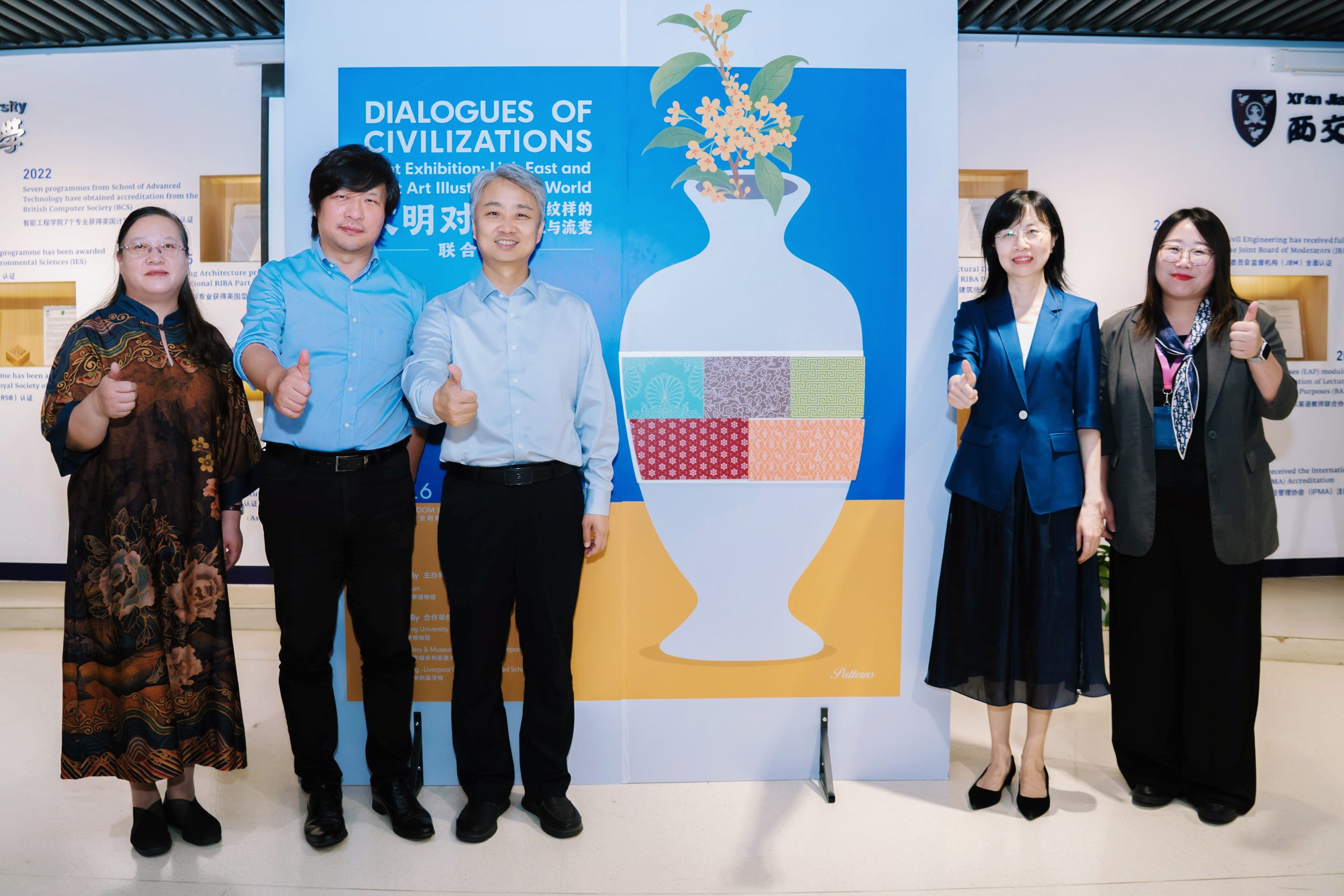
The exhibition opening ceremony. From left to right: Xiaoping Liang, Vice Principal of XJTLU Affiliated School; Zenglu Chen, Director of the Museum of Wu; Dr Xiaoyue Li, Vice President of XJTLU; Qing Lü, Director of Xi’an Jiaotong University Archives & Museum; and Xin Xu, Curator of the XJTLU Museum
Three sections, one continuous thread
The exhibition is organised into three sections that together explore how patterns have expressed ideas about nature, society, belief, and identity.
The first, dedicated to traditional Chinese motifs, walks visitors from the Neolithic period through the Ming and Qing dynasties, featuring pieces such as the human-face and fish motif, the animal-mask motif, and the Mandarin ducks and lotus motifs. The patterns evolved alongside changing beliefs, artistic practices, and social values. Some motifs draw directly on the natural world, while others acquired symbolic meanings over time.
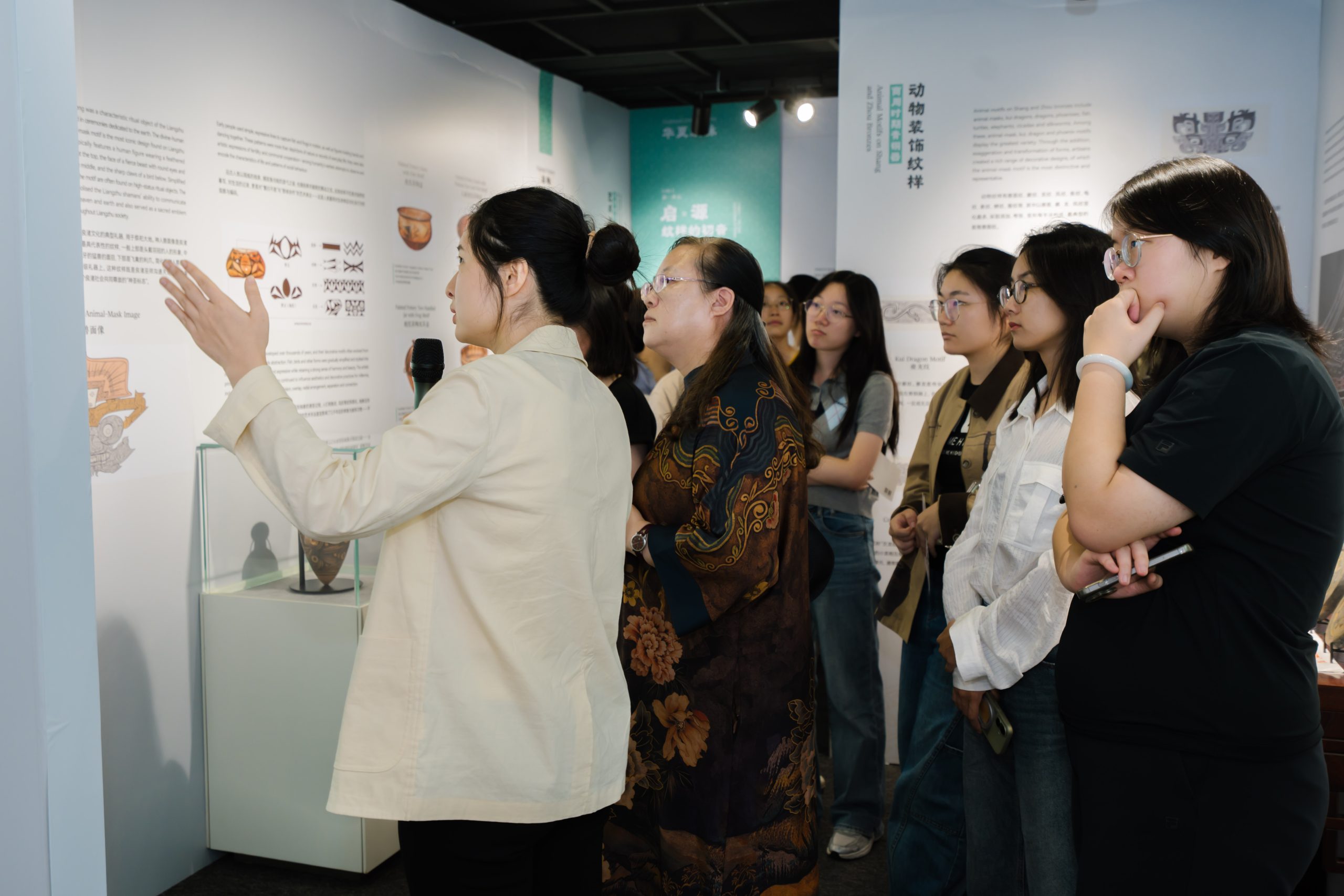 The second section turns outward to classical patterns from the Mesopotamian, ancient Egyptian, ancient Greek, and Islamic worlds, including the Greek meander, the peacock motif, and the ornate Rococo shell pattern. Geometric repetition, plant motifs, and animal figures appear across cultures.
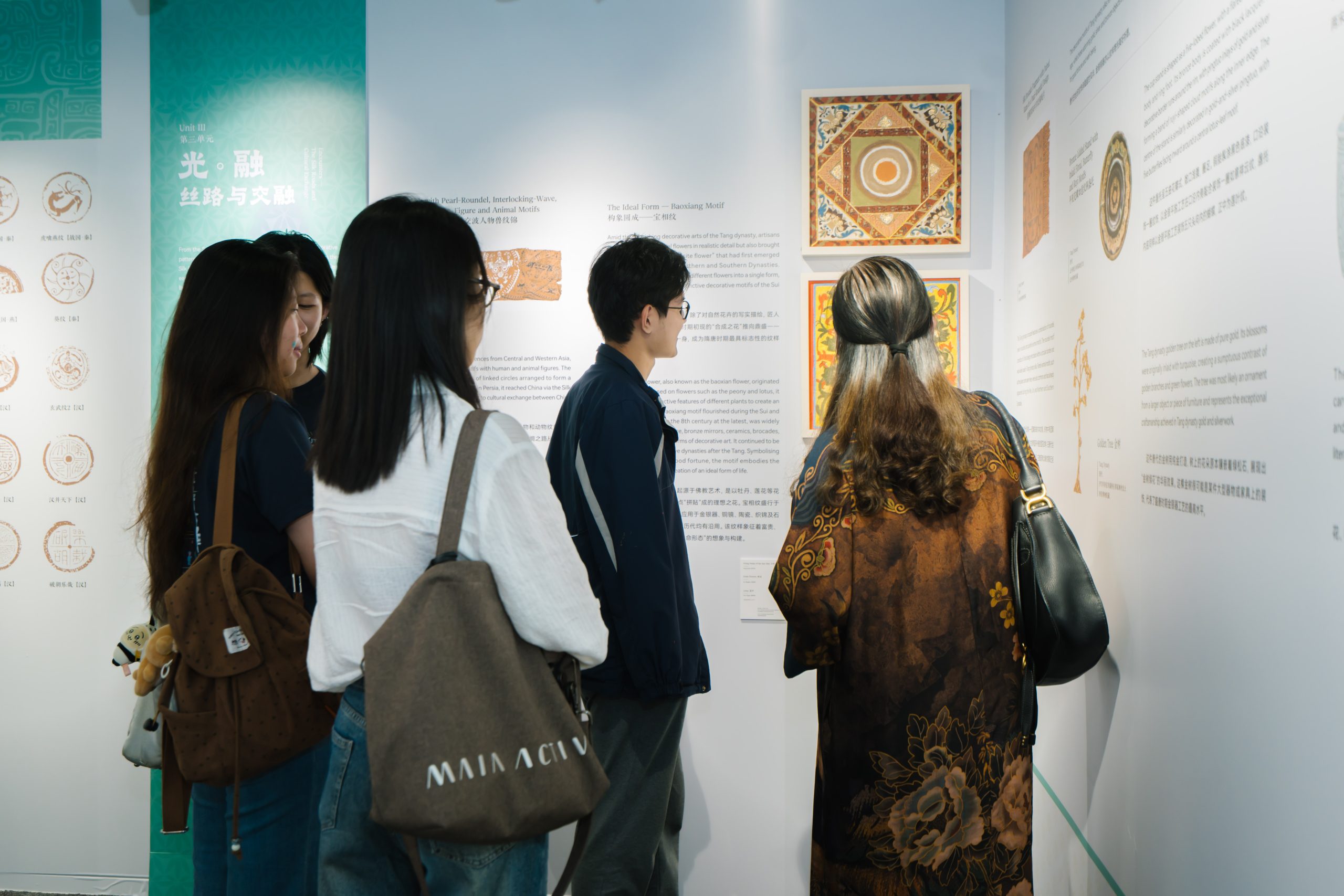
The third section, “The Regeneration of Patterns”, brings together student and staff artwork alongside archival material from XJTLU, Xi’an Jiaotong University Museum, the Victoria Gallery & Museum at the University of Liverpool, and the XJTLU Affiliated School.
Jiaqi Shi, a Year One MSc Operations and Supply Chain Management student at XJTLU, shared her experience attending the exhibition. “Going through the whole exhibition, I could really see and feel the different patterns from different eras and regions; it was all very new to me,” she said.
When asked what left the deepest impression on her, she said: “Rather than just looking at static displays, this exhibition included two interactive activities, a jigsaw puzzle and a drawing game, that let us get a hands-on experience. It gave us a much more immersive and deeper understanding of the traditional pattern culture.”
Blue-and-white, reimagined by hand
The afternoon’s centrepiece was a workshop titled “Borrowing Blue and White to Paint Qinghua”, led by Kaiqi Wang and Wei Zheng from the Museum of Wu. Participants learned about the history and symbolism of blue-and-white porcelain – a craft that served as a visual ambassador for Chinese culture abroad for centuries – before trying their hand at designing their own composition.
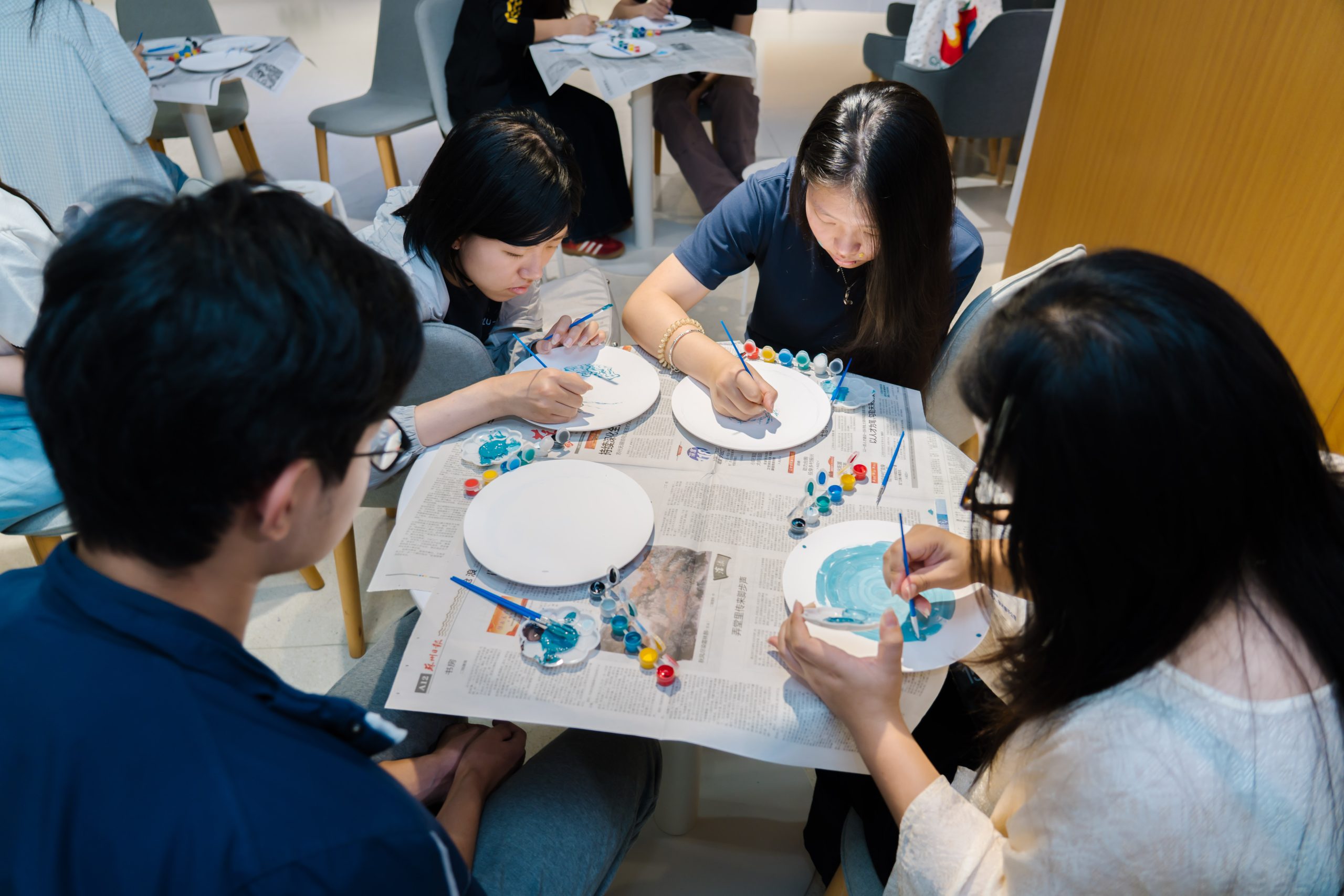
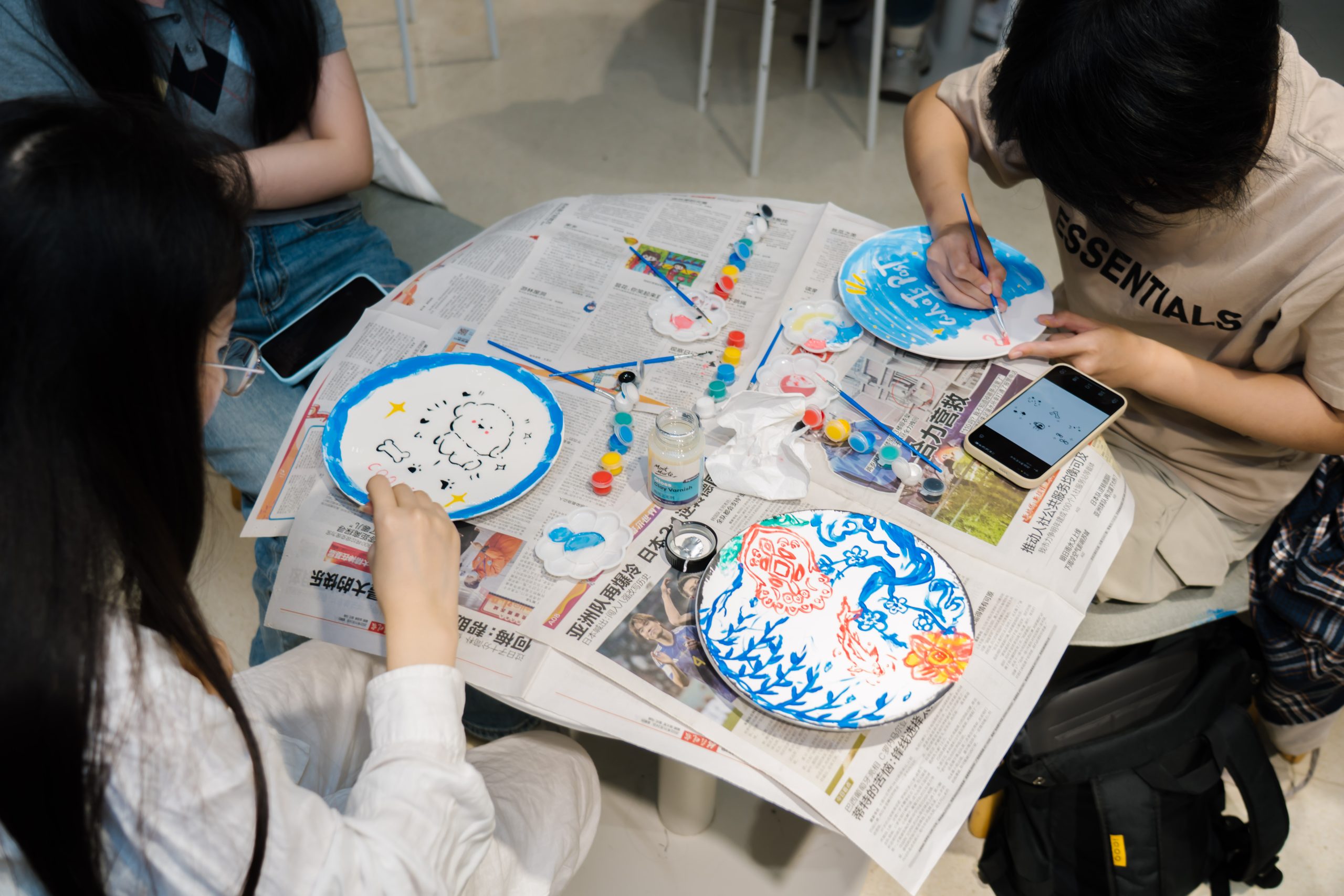
Yanxi Long, a Year One BA Business Administration student, said: “Usually when I visit museums, I just skim through, mostly noting which dynasty a piece is from and where it originated, without really digging into the history, differences, or aesthetic choices behind the patterns. I’ve learned a lot from this workshop.”
Speaking about the experience of painting a blue-and-white porcelain design by hand, she said: “I’d rarely had the chance to create traditional Chinese patterns before, so this really struck a chord with me. We can bring traditional patterns and culture into the kinds of leisure activities young people already enjoy, and carry that traditional beauty into everyday life.”
Other attendees of the opening ceremony included Yiming Li, Deputy Director of Xi’an Jiaotong University Archives & Museum, and Dr Xin Bi, Chief Officer of Data and Director of the Centre for Knowledge and Information at XJTLU. Joanne Fitton, Deputy Director of Libraries, Museums and Galleries at the University of Liverpool, also sent a video message congratulating the exhibition on its opening.
By Xinmin Han
Edited by Patricia Pieterse
Photos by XJTLU Museum
Legal Disclaimer:
EIN Presswire provides this news content "as is" without warranty of any kind. We do not accept any responsibility or liability for the accuracy, content, images, videos, licenses, completeness, legality, or reliability of the information contained in this article. If you have any complaints or copyright issues related to this article, kindly contact the author above.
